The Hilleberg History
In 1971, Bo Hilleberg, a professional forester, founded his own company, Hilleberg AB. That same year, while on a ski vacation in the Austrian Tyrol, Bo met Renate Neuner. After a couple of years, the two had fallen in love, married, and she had moved with him to Stockholm, Sweden. Their marriage was the final, necessary ingredient in the mix that has become Hilleberg the Tentmaker.
Before Renate, Bo’s fledgling company was primarily a forestry equipment concern, with tent making as a hoped-for sideline. An avid, lifelong outdoorsman, Bo was terminally frustrated with tents that required pitching the inner tent first and then covering it with a loose rain fly that usually displayed the same properties as a kite in the wind. He envisioned a tent that had an outer and inner tent that pitched together, simultaneously – but he didn’t have the necessary sewing skills. With Bo and Renate’s marriage, conjugal and commercial became one: Renate took charge of the sewing while Bo handled design and sales, and with their combined efforts, the company flourished.
Today, family and business are still inextricably linked. Bo is Chairman, and is senior advisor to the product development team; daughter Petra is CEO of the Hilleberg Group, President of both Hilleberg AB in Sweden and Hilleberg Inc in the US; and Bo, Renate, Petra and her brother Rolf make up the governing board of directors – clearly, family synergy continues to beget success.

Bo Hilleberg establishes his company, Hilleberg AB, and, on a skiing trip to Austria, meets his future wife, Renate Neuner.
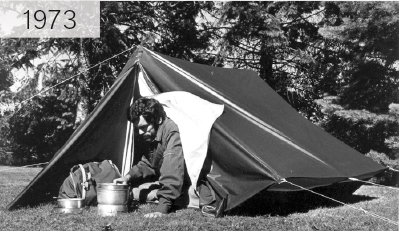
Hilleberg introduces the Keb, the first commercial tent to have a connected inner and outer. The simultaneous pitching of both elements of the tent make it an immediate success.
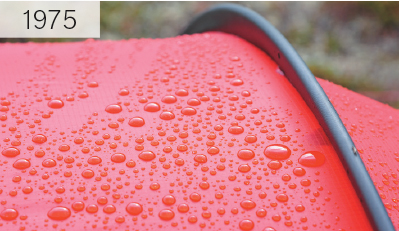
Bo discovers that a certain type of silicone coated fabric is six to seven times stronger than nearly any other tent fabric, and adopts it for all Hilleberg outer tents. Dubbed Kerlon 1500, it has an exceptional tear strength of 15 kg/33 lbs.
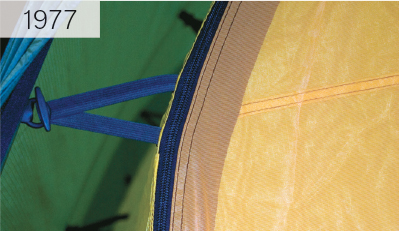
Bo redesigns the linked inner and outer tent design so that the two pieces can be disconnected, and incorporates this into a tunnel tent design.
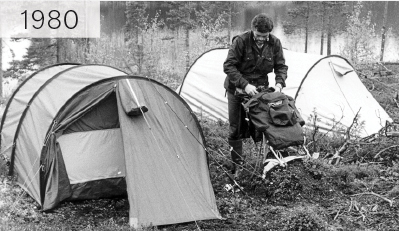
The introduction of the Keron, then and now the company’s signature tent.
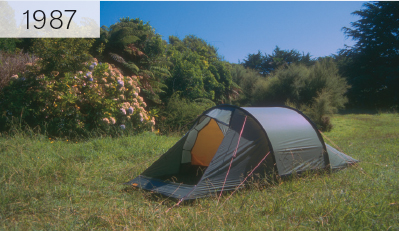
The first generation Nallo model is introduced to great acclaim, both for its remarkably low weight and for its innovative integration of the venting system into the outer tent door.
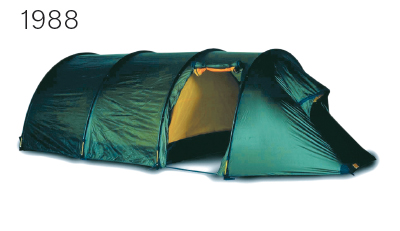
The first, extended vestibule “GT” models, the Keron GT and Nammatj GT, are introduced.
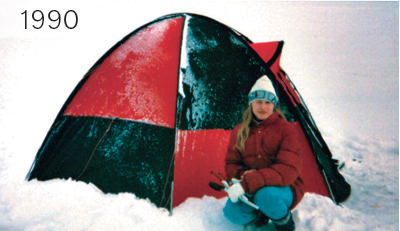
Hilleberg begins making dome tents. Pictured is a multi-color Staika prototype produced in 1989 for a South Pole expedition.
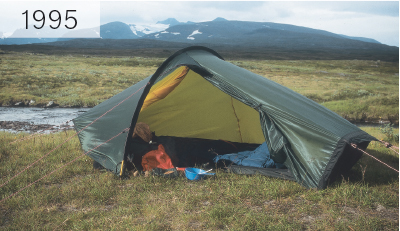
The Akto, a roomy, very light, solo tent with true all season function, is an immediate hit upon its introduction.
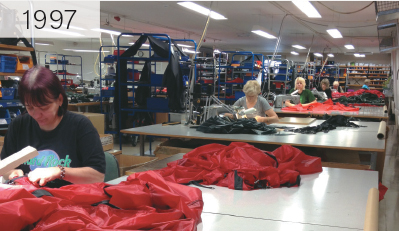
The company buys property in Estonia and begins building the new Hilleberg factory. It opens February 2, 1997.
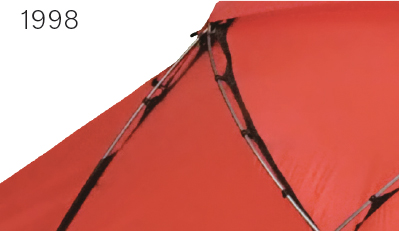
The Akto, a roomy, very light, solo tent with true all season function, is an immediate hit upon its introduction.
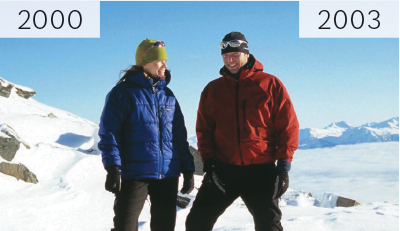
In 2000, Petra Hilleberg founds Hilleberg, Inc., the US subsidiary in Redmond, WA. In 2003, Rolf Hilleberg becomes Managing Director of Hilleberg the Tentmaker in Sweden.
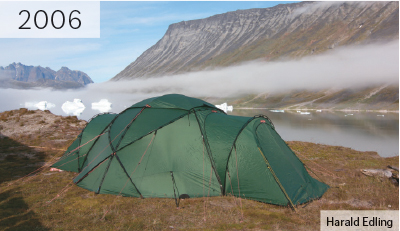
The fully modular Atlas group tent is introduced. Completely free standing, the Atlas sleeps up to 8, and can be configured to the user’s needs, with several inner tent options, and the ability to connect multiple Atlas tents.
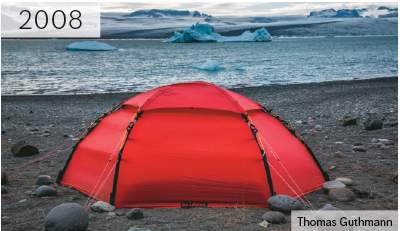
The two person Allak and one-person Soulo join the line. Both have Kerlon 1200 in their outer tents, are fully freestanding, and have integrated vestibules (2 in the Allak, 1 in the Soulo). Both are roomy, very strong, and remarkably light.
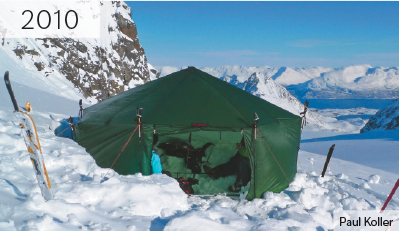
Hilleberg adds the Altai, a simple, yurt-inspired and lightweight group tent. It can sleep 6 or more, or serve as a dining or gathering spot for even more. An optional inner tent and floor becomes available in 2011.
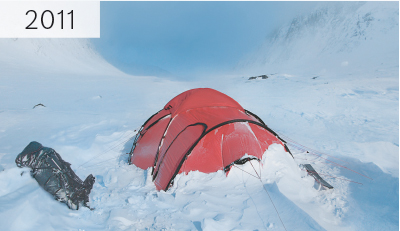
The four-person Saitaris and redesigned three-person Saivo dome tents debut. Built for the most demanding conditions, both feature a new pole system combining full pole sleeves and shorter sleeves and clips, designed expressly to make pitching larger dome tents simple for one person, especially in bad weather.
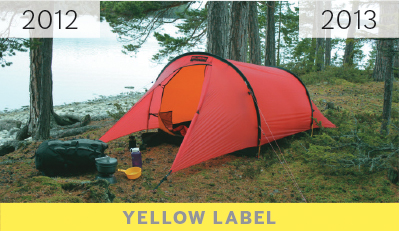
In 2012, Hilleberg introduces its first three-season tents, the Anjan tunnel models and the Rogen dome model, built with 9 mm poles and a new, very light outer tent fabric, Kerlon 1000. In 2013, Hilleberg classifies all tents into one of four Labels – Black, Red, Yellow or Blue – each representing a grouping by components and/or construction.
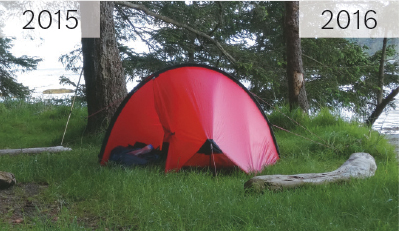
Hilleberg introduces the Enan one-person and Niak two-person models in the Yellow Label series, and the very large, fully modular group tent Stalon XL in the Blue Label series. Petra Hilleberg takes over from Bo Hilleberg as CEO of the Hilleberg Group. Bo continues as Chairman.
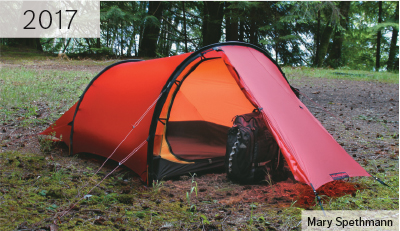
The original Yellow Label tents, the Anjan, Anjan GT and Rogen models, are redesigned. In addition, the four person Kaitum 4 and Kaitum 4 GT join the Kaitum family.
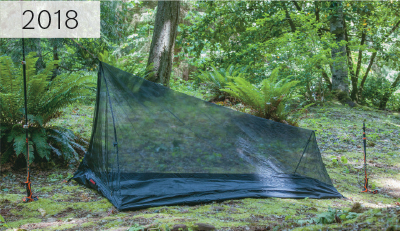
The Mesh Tent 1 is introduced. A very light solo mesh shelter with sewn in floor, it is a perfect bug protection solution for minimalist summer backpacking. Carolina Geiger is named Operations Manager of Hilleberg’s European operations.
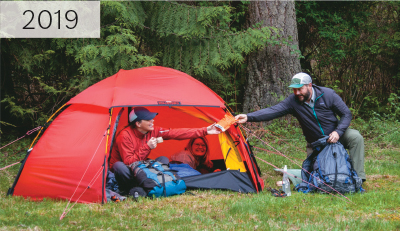
The Allak family grows with the addition of the three-person Allak 3. The original Allak is now called the Allak 2. Petra Hilleberg, CEO of the Hilleberg Group and President of the company’s US division, is named President of Hilleberg the Tentmaker AB, the company’s European division.

 Cart
Cart






















